Why the colour of a pastel stick might differ from the colour applied on paper
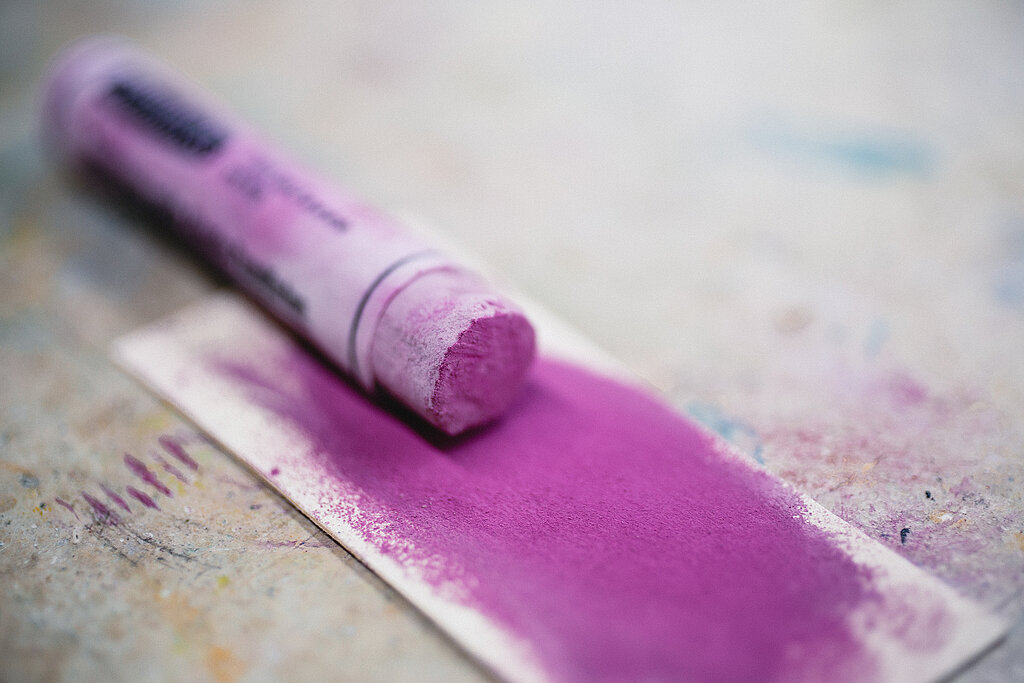
If you work with pastels, you are probably familiar with this moment: the colour applied on paper looks slightly different from the colour of the pastel stick itself. This is not a quality issue, but a natural characteristic of high-quality artists' pastels – and is closely linked to how they are made.
The manufacture of Schmincke pastels
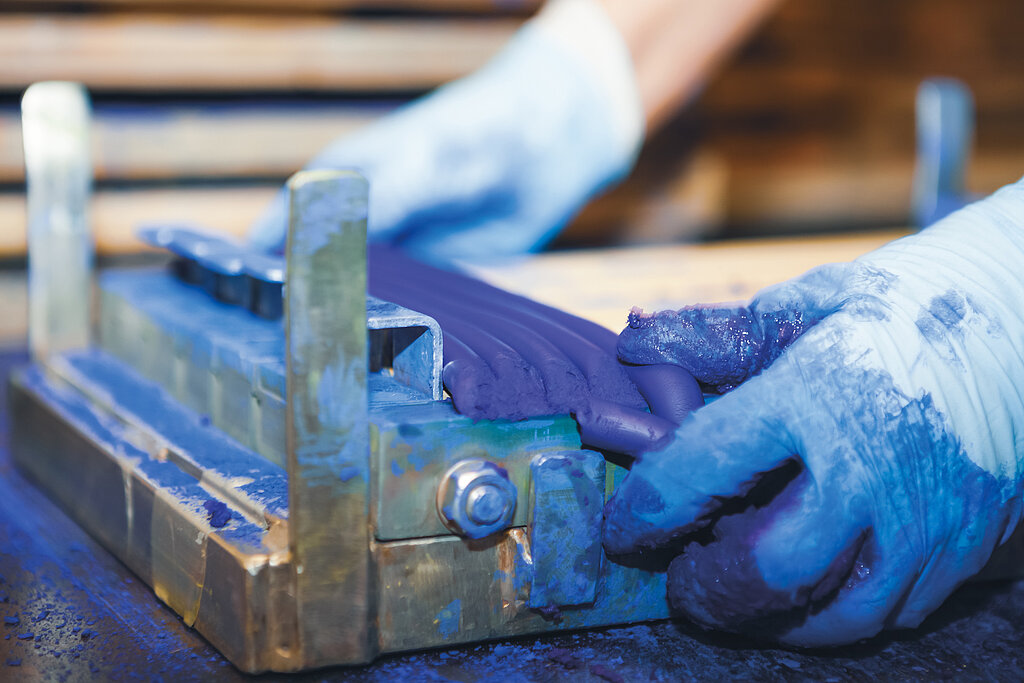
Schmincke pastels consist almost exclusively of high-quality pigments. These are mixed with water to form a paste, then pressed into stick form and cut to size.
During the kneading process, the ingredients are mixed together particularly evenly. At the same time, this process acts as a gentle grinding process, further refining the pigment particles. As each pigment has different properties, individual shades require varying processing times.
What causes the surface of the pastel stick to look different?
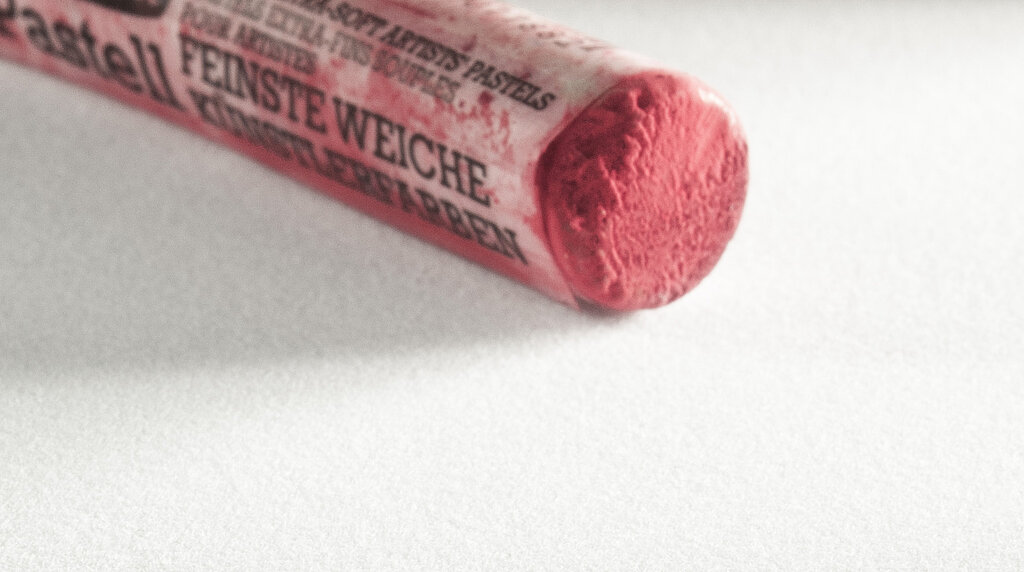
Even in a homogeneous mixture, the pigment particles react extremely sensitively to external influences – particularly whilst the pastel sticks are drying. Even slight fluctuations in temperature or humidity during production can affect the appearance of the stick’s surface. The sensitivity of certain pigments is to such an extent that Schmincke deliberately produces certain pastel shades only at specific times of the year.
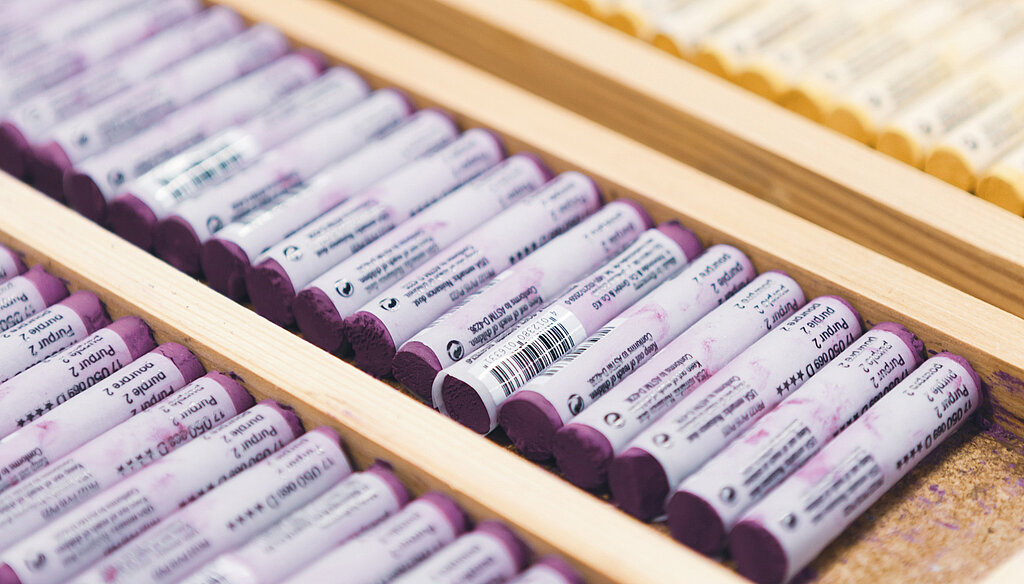
In some cases, the external colour of the stick may therefore appear slightly different (e.g. lighter or darker) than the colour applied onto the paper. However, this does not affect the actual pastel quality or the shade.
The painting surface also influences the colour impression
Particularly on rough papers or textured painting surfaces, the perception of colour also changes: during application, the pigment particles are rubbed further and become more intensely visible. As a result, pastels often only reveal their full luminosity and depth once applied to the surface.
High-quality pigments ensure vibrancy
It is precisely the high pigment content that makes Schmincke artists' pastels so expressive and vibrant. Minor differences between the surface of the stick and the actual colour applied are therefore a natural part of this high-quality product – and a sign of the special composition of genuine artist-grade quality.