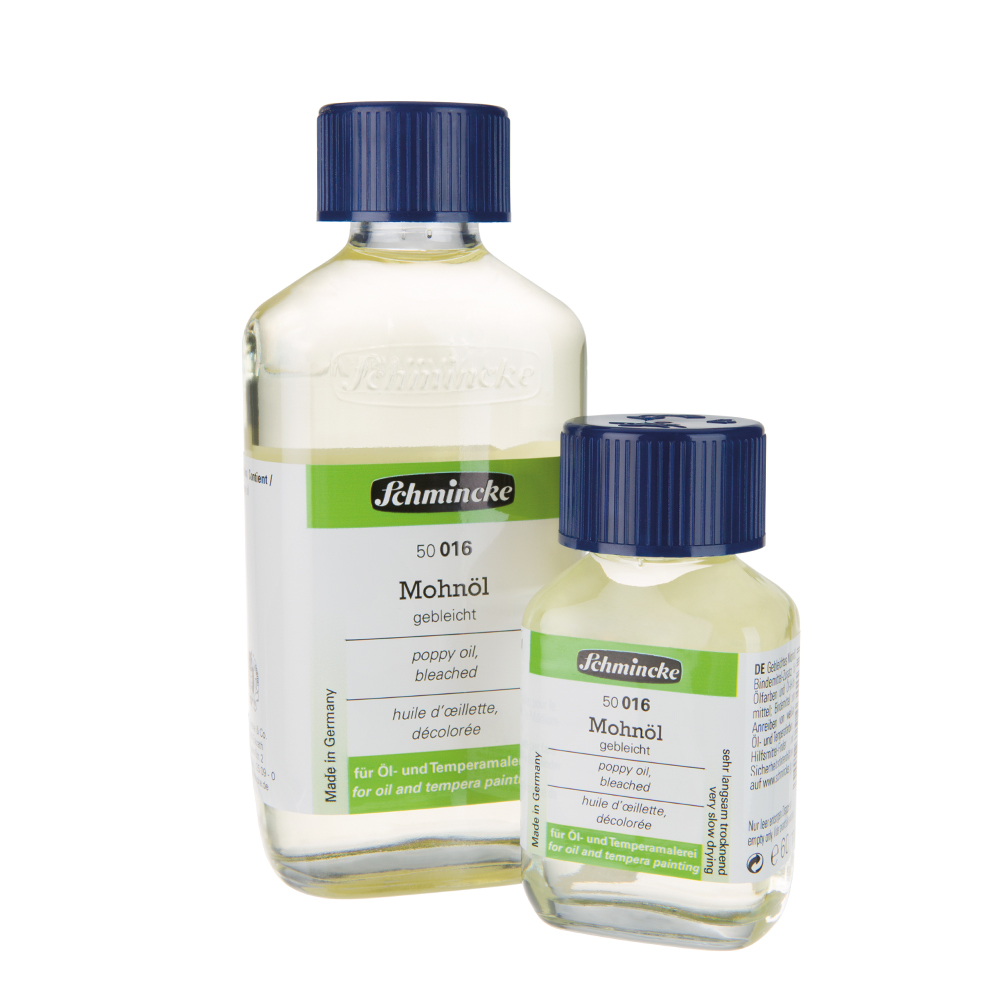
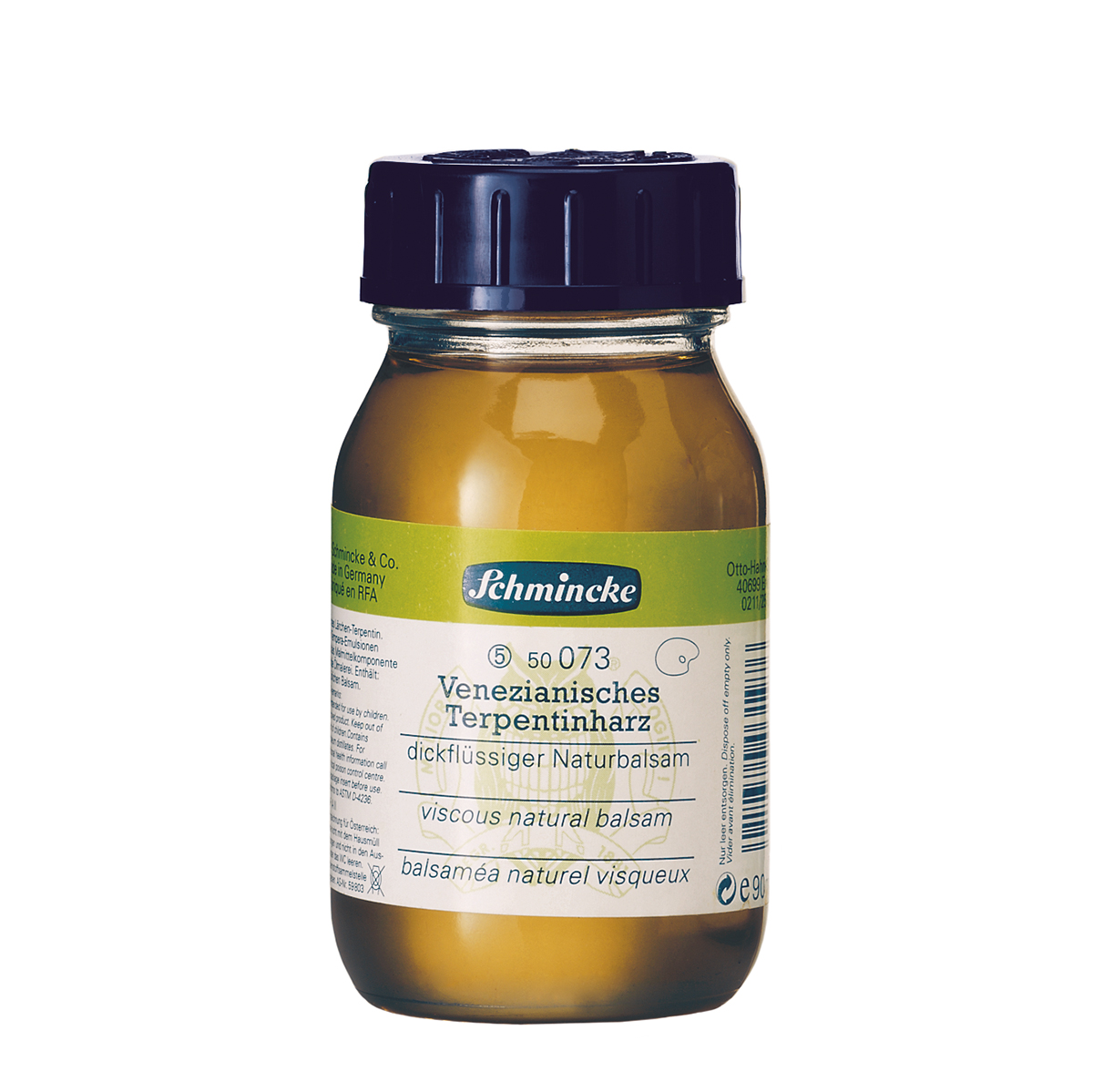
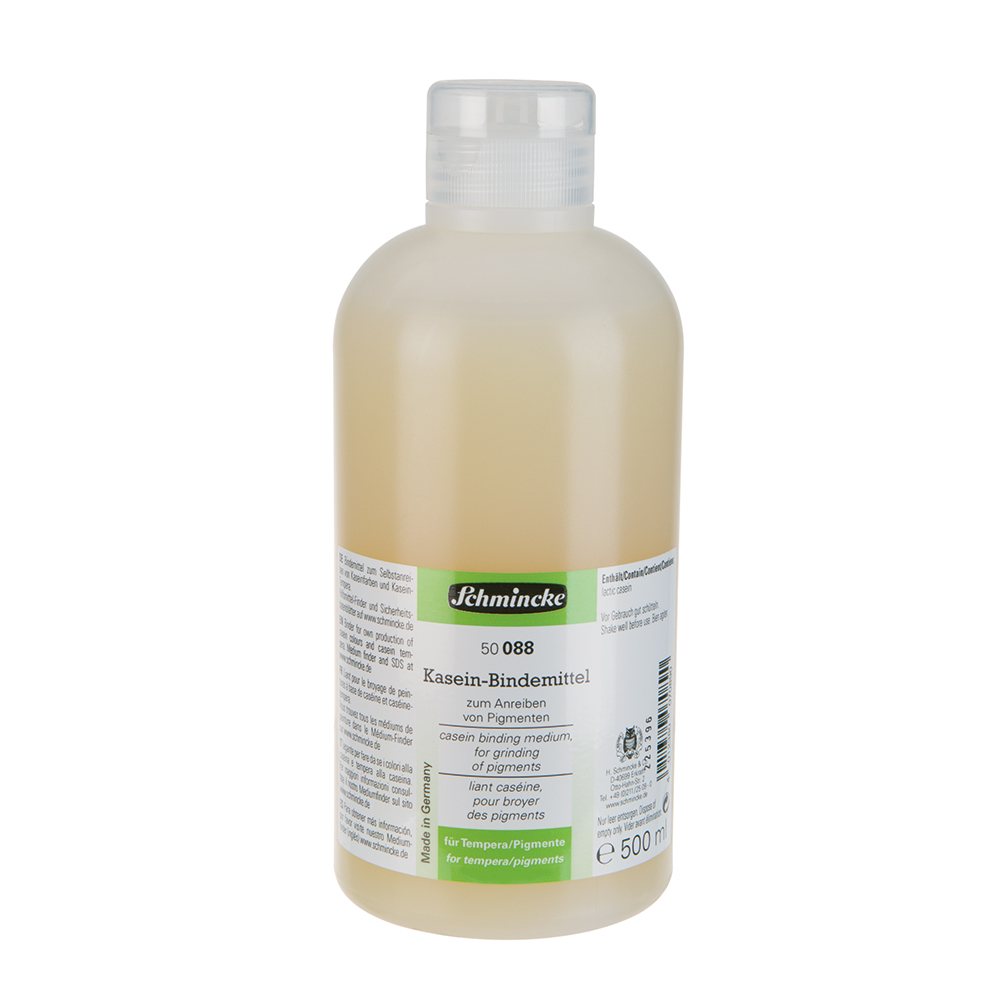
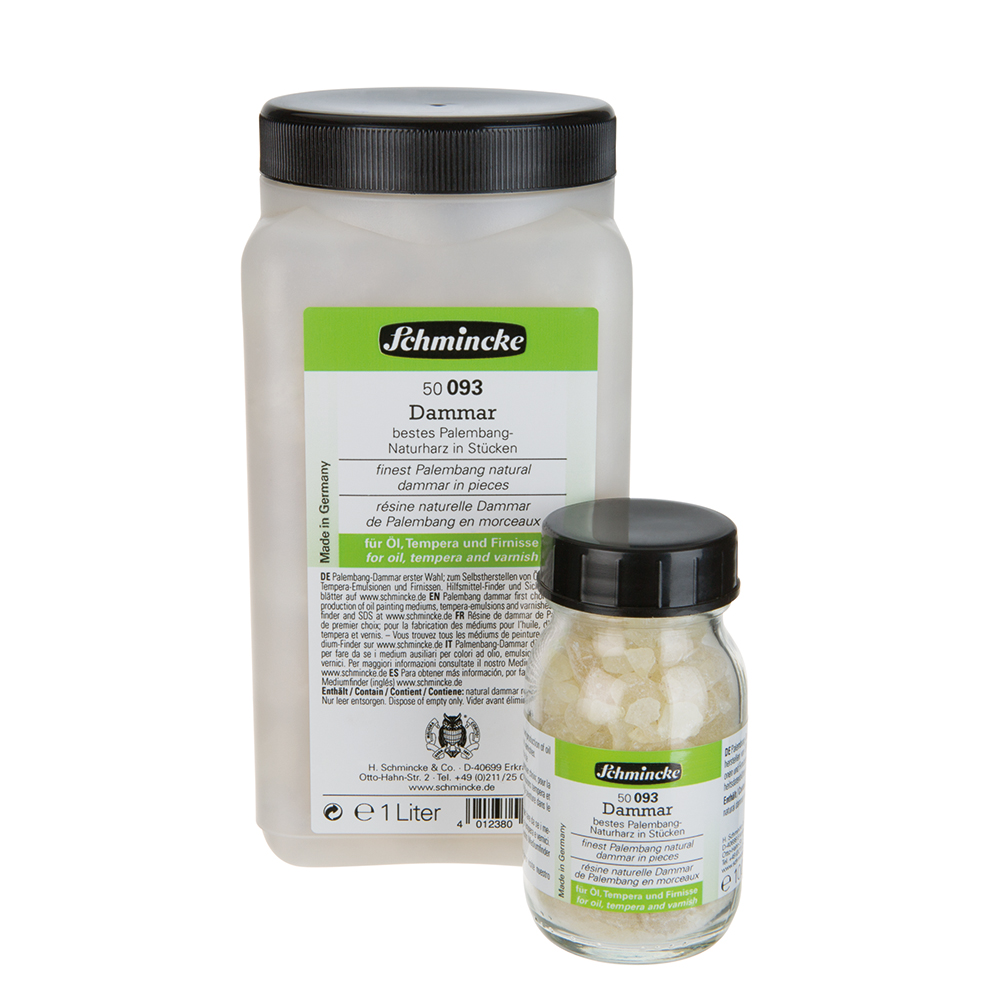
Making your own artists' colours is not difficult! With binders and pigments from Schmincke
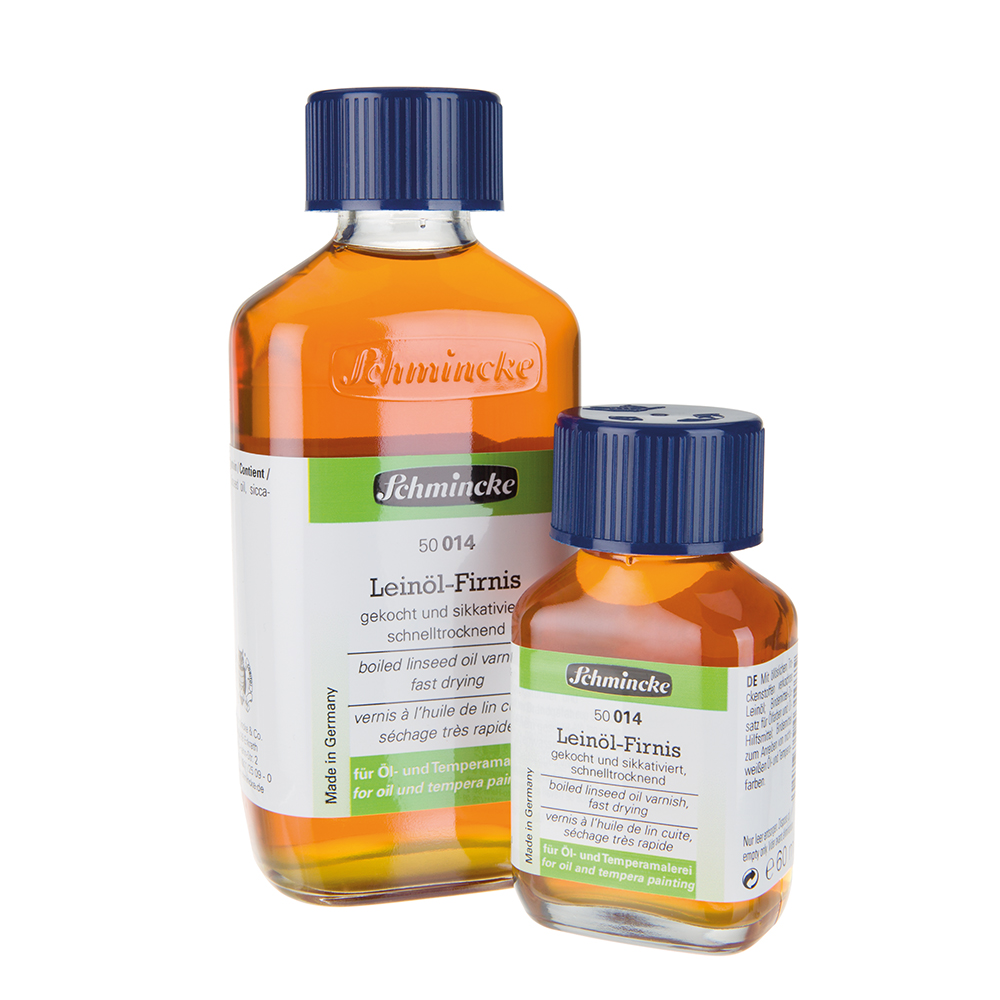
Many artists today still rub their colour material themselves in their home studio with a glass runner and a slightly roughened glass plate, just like the old masters. For certain painting techniques, it also makes sense to add further binding agents to the finished colours. Schmincke offers a variety of products for all these applications. Together with the finest artist pigments of grade 18, this gives the user numerous possibilities for the individual production of watercolour, gouache, linocut, acrylic, oil and tempera paints. Due to the widely varying binder requirements of the individual pigments, it is unfortunately not possible to provide specific formulations. However, the following is a standard formulation for a classic lean egg tempera, which must of course be individually adapted to the pigment you have selected: For the tempera binder, mix 1 volume of egg and 1 volume of linseed oil varnish (50014) in a well-sealed bottle by shaking, before adding 1 volume of water and shaking vigorously again. TIP: If you break the egg carefully, all ingredients can be optimally dosed with the empty egg shell!
To produce the tempera colour, a tablespoon-sized amount of pigment is gradually mixed with as much tempera binder on a rubbing plate using a palette knife until a creamy paste is formed. This is followed by the actual rubbing of the colour mass using circular movements with the glass runner. Now add binder or pigment to the mixture until the colour paste has the desired consistency. ATTENTION: It is always important to pre-test all self-mixed artists' colours individually with regard to your planned painting technique!
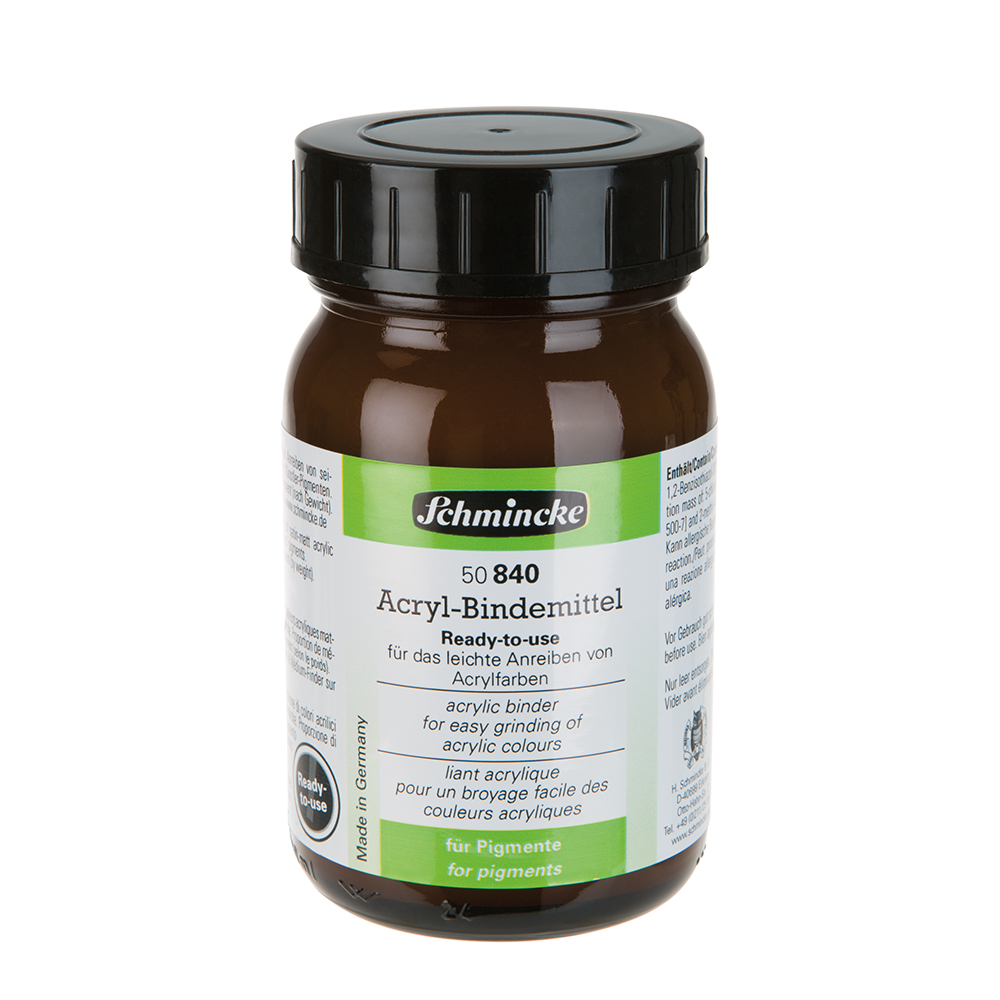
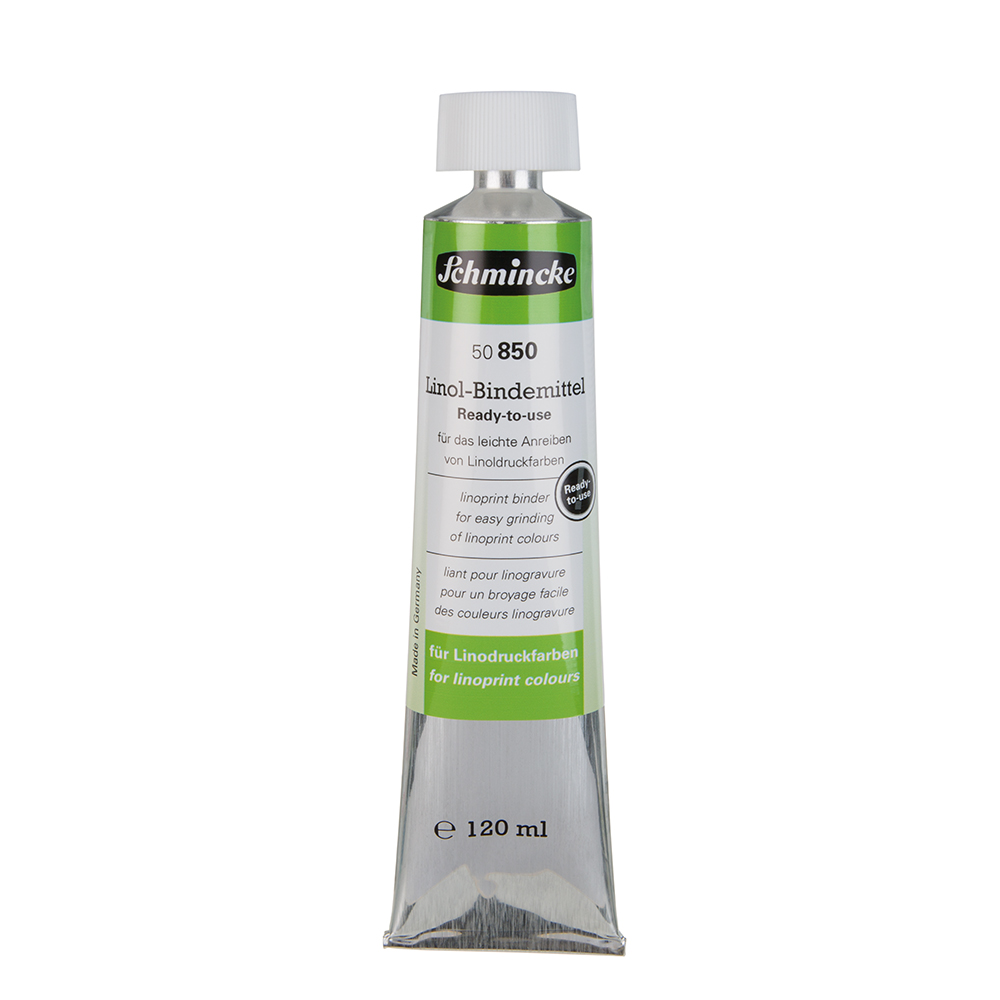
Ready-to-use binder
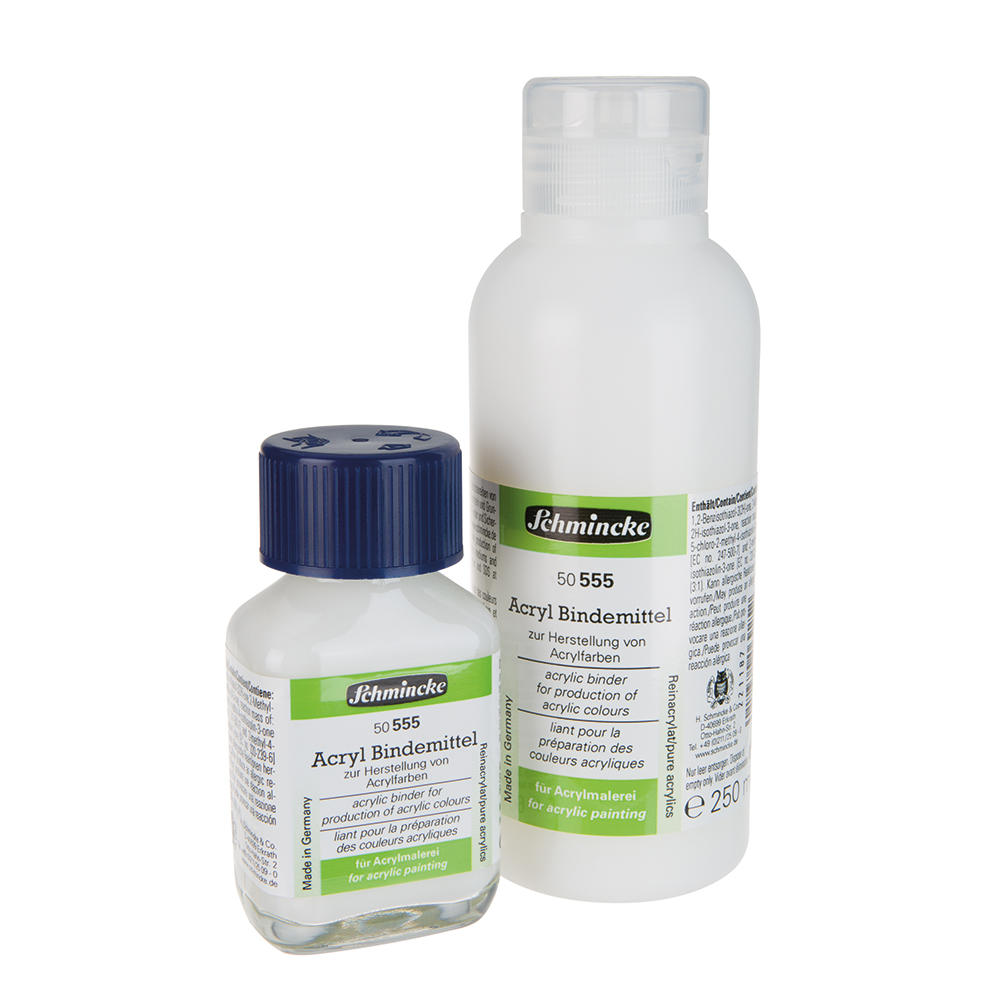
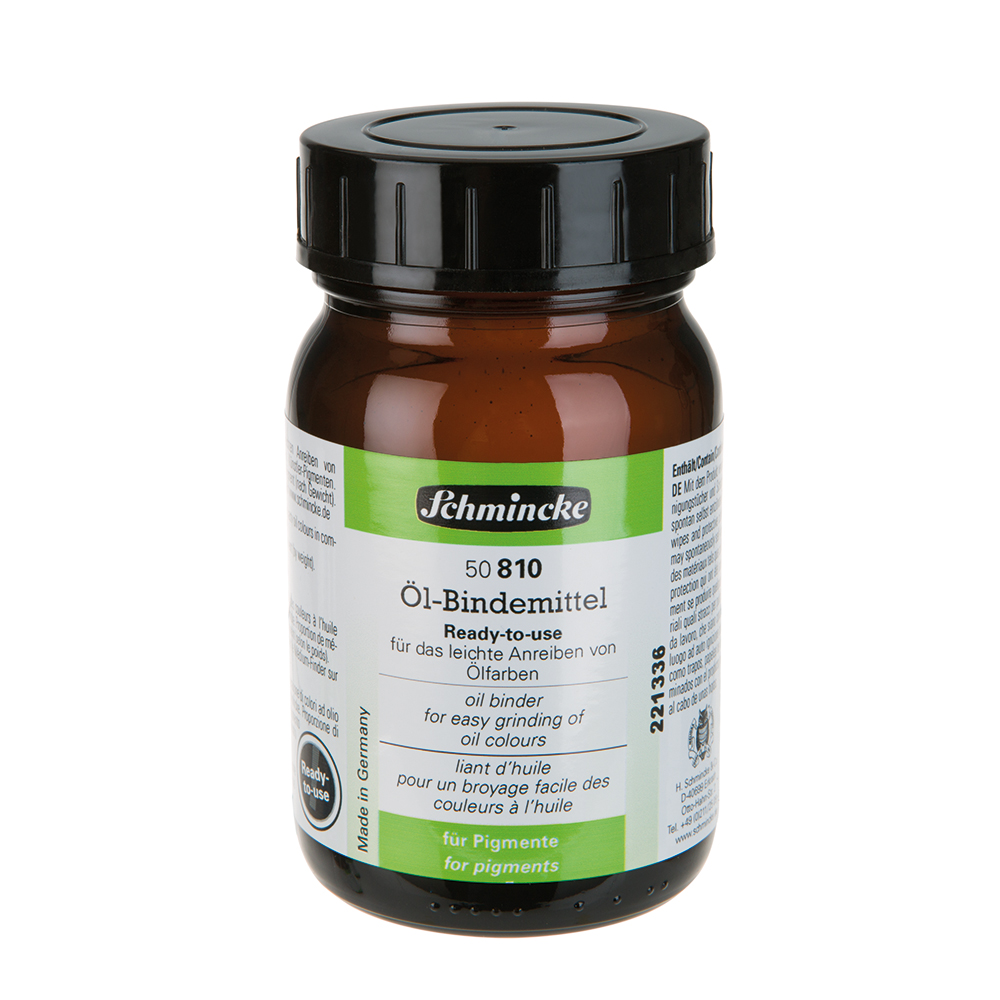
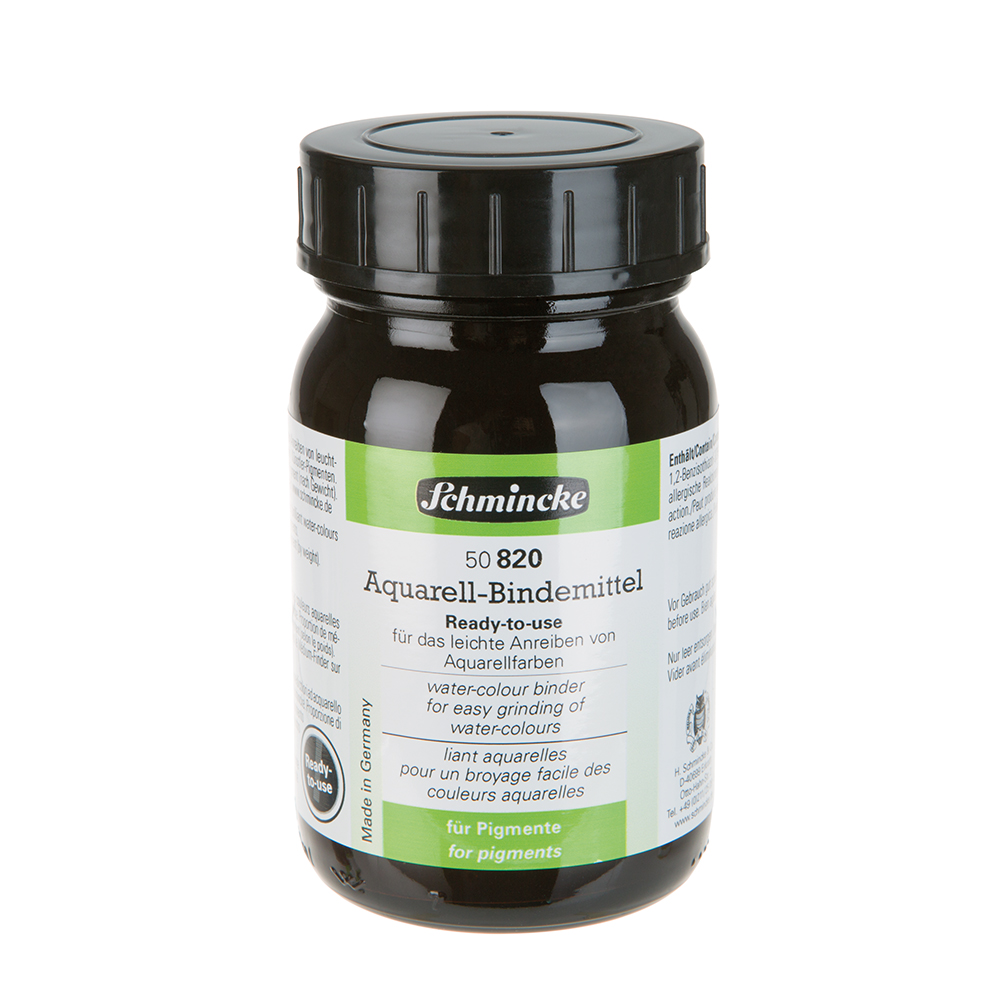
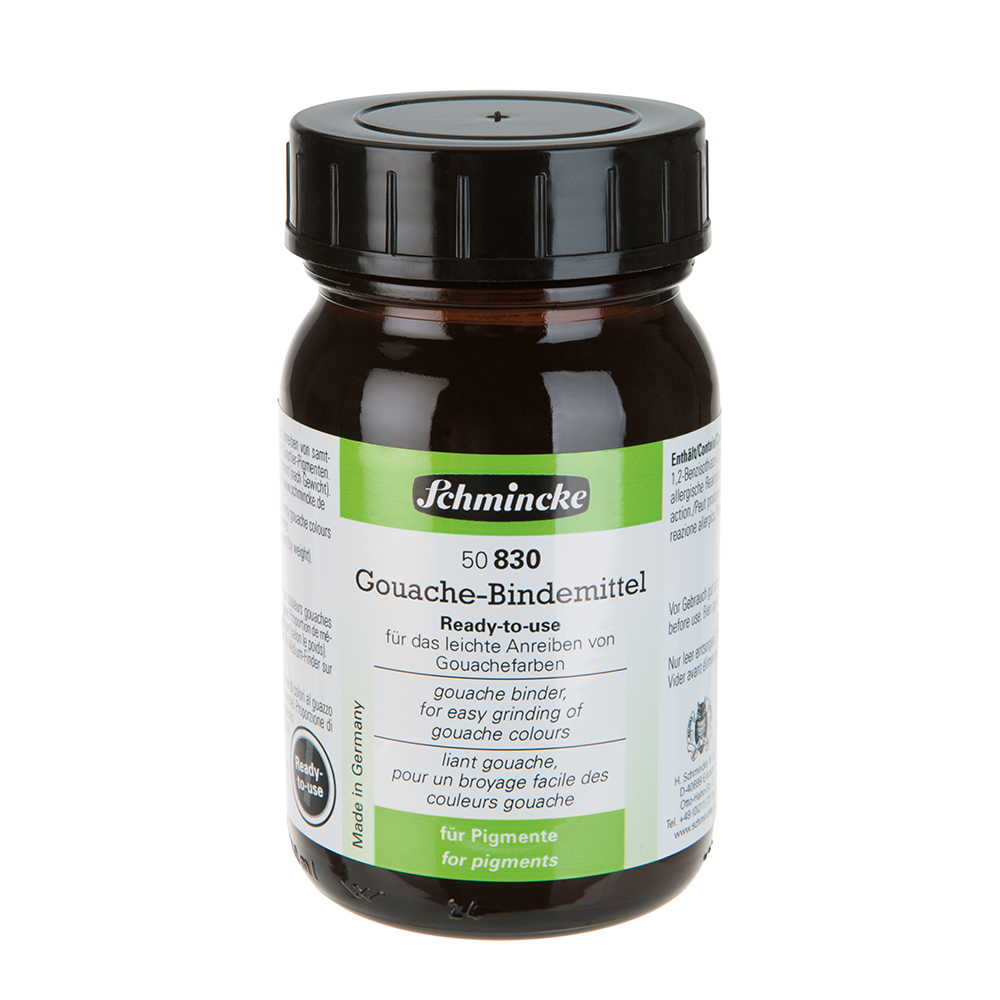
Our ready-to-use binders provide an ideal basis for producing your own artists' colours in your own studio. Together with our extremely lightfast, uncut pure artist pigments of grade 18, you can mix your own colours in no time at all.
impasto oil colours
silk matt acrylic colours
glazing watercolours
velvety gouache colours
lino printing colours with sharp contours
according to the simple principle:
‘Ready-to-use’ binder + Schmincke pigment = your own artist colour
And this is how it's done:
Rub a teaspoon-sized amount of pigment with the ‘ready-to-use’ product of your choice to form a smooth colour paste (tools required: painting knife and glass rubbing plate or flat porcelain plate or glazed tile). The mixing ratio of binder to pigment is highly dependent on the type of colourant:
For the ‘ready-to-use’ oil binder (50810), start with approx. 1 part binder and 1 part pigment (by weight),
for all other ‘ready-to-use’ binders - for watercolour (50820), gouache (50830), acrylic (50840) and linoleum printing (50850) with approx. 2 parts binder and 1 part pigment (by weight).
Depending on the pigment, add more binder or more pigment to achieve the desired consistency.
The correct ratio can be recognised by the fact that the dried paint coats have a smooth surface and do not rub off when rubbed with the dry ball of the hand. Such ‘chalky’ mixtures require more binder.
Special binders for bronzing
And to conclude this chapter with a speciality: With the help of the bronze medium (50032) and the oil bronzes (formerly bronze dampening pastes) from the Schmincke range of real artist bronzes, dazzling metal effects can be achieved on oil paintings as well as on other surfaces such as wood, metal or plaster!
And this is how it's done:
Simply mix 3 parts Oil Bronzes with 2 parts Bronze Medium (50032). If better wipe resistance is required, increase the proportion of binder. The mixture can be diluted with turpentine oil (50024, 50102) or turpentine substitute (50019). For an optimum metallic effect, it is advisable to thicken the oil bronzes just before painting. Absorbent surfaces should also be primed with Bronze Medium. Important: The oil bronzes are only suitable for indoor objects (not in damp rooms!). They are available in the following shades: