Why artists' colours separate – and why shaking and kneading are so important
Anyone who works with liquid artists' colours is familiar with this phenomenon: after being left standing for a while, the colour in the bottle suddenly appears to have separated into two layers. Pigment collects at the bottom, whilst the binder appears clearer at the top. This is not a sign of poor quality – but a completely natural physical process.
What happens with the colour?
Artists’ colours are mainly consisting of pigments and a binder. These two components differ in density: pigments are generally heavier than the liquid binder (e.g. acrylic or watercolour binders). Over time, this causes them to sink to the bottom – a process known as sedimentation.
Which factors influence settling?
Several aspects determine how quickly and to which extent a paint separates:
Particle size and density of the pigments: Larger or denser pigments settle to the bottom more quickly.
Viscosity of the binder: The thinner the binder, the less effectively it can keep the pigments in suspension.
Storage time: The longer a colour is stored without being moved, the more noticeable the separation becomes.
No need to worry
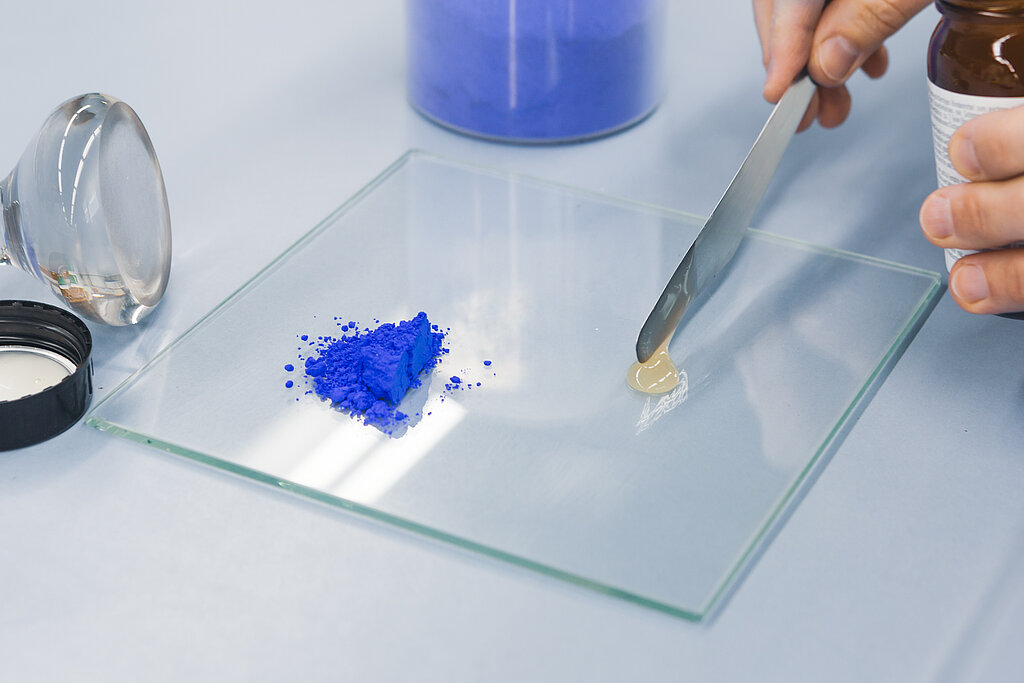
Separation is completely normal and cannot be entirely prevented in the long run. The key is to prepare the colour correctly before use: by shaking vigorously or stirring, the pigments and binders will recombine to form a homogeneous, ready-to-use paint. This applies in particular to liquid acrylic and watercolour paints: AERO COLOR Professional, AKADEMIE Acryl Ink or Aqua Drop.
Thixotropy – why linoprint ink appears relatively firm and how it becomes smooth
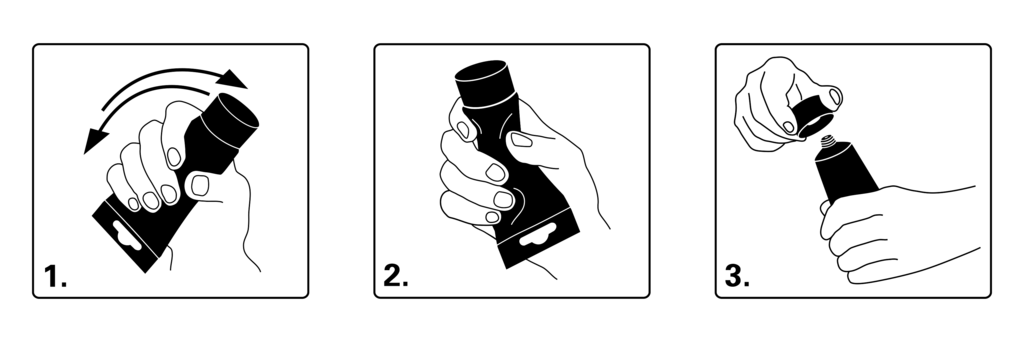
A related effect can be observed in linocolour: so-called thixotropy. This involves a change in the colour's viscosity when agitated – even though the colour may appear ‘lumpy’ when at rest, it achieves the optimum consistency when gently kneaded in the tube or rolled out on a plate.
Conclusion
The settling of pigments in liquid artists’ colours and the change in viscosity of linocolours are natural characteristics of high-quality artists’ colours. With a simple step – giving the paint a good shake, kneading it or rolling it out – you can ensure that your paint reveals its full brilliance and quality
By the way: Specifics for product handling and product safety are available on our website under Service & Contact/Download/safety data sheets. For special questions please don´t hesitate to contact our lab-team: