




‘On top of the World ‘- The 3rd highest peak in Madeira - by Barry Herniman
One of my previous overseas painting holidays was on the wonderful island of Madeira, an oasis in the middle of the Atlantic. We stayed on the rugged and magnificent North coast with all its natural beauty and breathtaking views. And none were more breathtaking than the views we were afforded around the island’s third highest peak, the Pico de Arieiro at 5965 ft.
Material: Schmincke PRIMAcryl Professional
I have been using Schmincke PRIMAcryl Professional for many years, and they really suit my painting style. Modern acrylics are a lot more receptive to being diluted with water without losing adhesion or chroma (colour strength). I can actually dilute these colours down to a watercolour consistency which enables me to produce all my watercolour techniques. Because the Acrylics are waterproof once dry, I can overlay multiple glazes of colour without disturbing the initial works.
- Brilliant yellow 209
- Indian yellow 212
- Pyrrole orange 216
- Chinacridone red 325
- Alizarin crimson hue 324
- Cobalt turquoise 456
- Cobalt blue light 435
- Phthalo green bluish 563
- Manganese violet 334
- Titanium white 101
- Zinc white 100
- Box Canvas
- White gesso 50518
- Acrylic painting medium 50550
- 3H pencil
- Brushes: Stirling Acrylic Long Flats No 6,4,2 Rounds No 4.
- Rigger 4 and 2
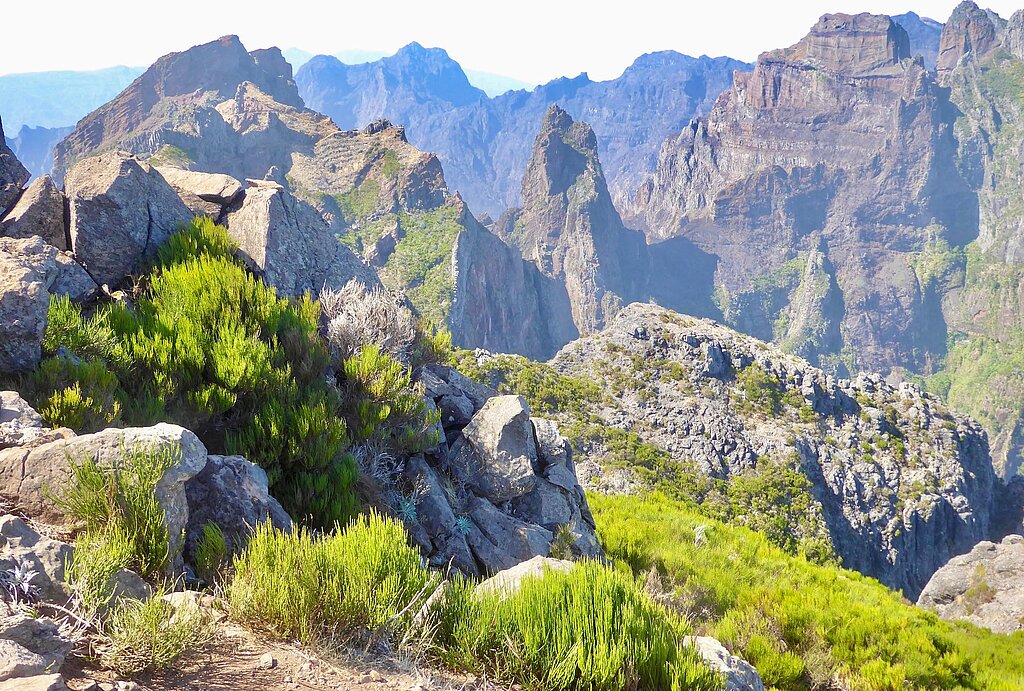
My reference photo of the Pico de Arieiro.
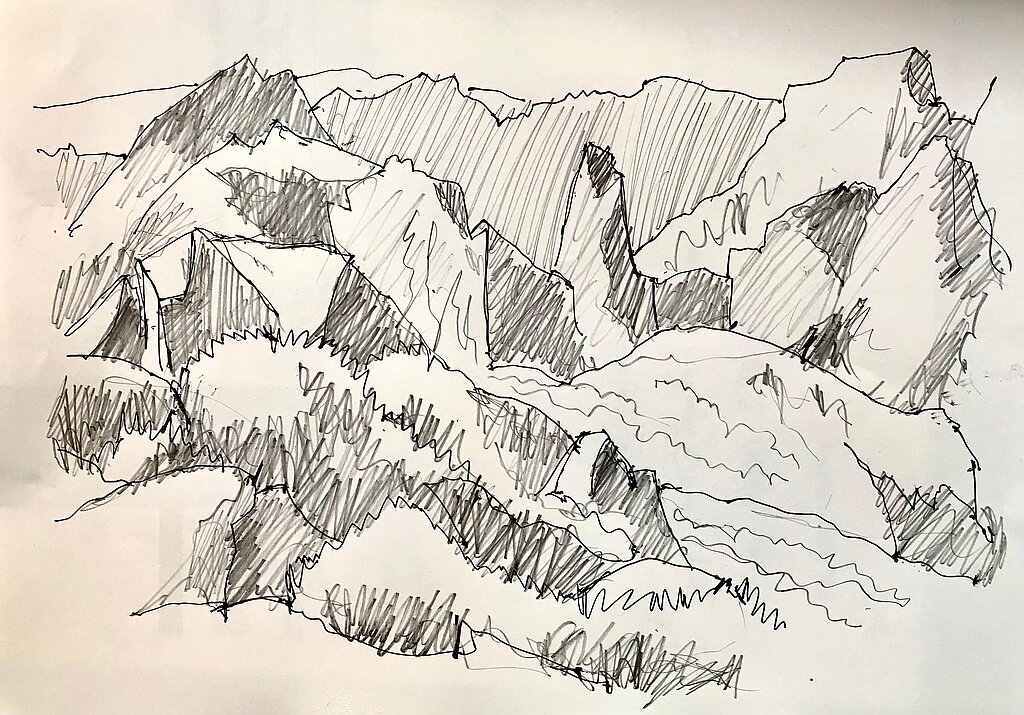
Step 1
Just a very quick and basic sketch to get my head around the shadow areas. Nothing very elaborate but it helped me focus on the overall plan for the painting. Loads of counterchange here, light against dark and vice versa, which I just love in a scene.
Before I started painting, I covered the box canvas with a coating of white Gesso which I brushed on with a large bristle brush to give me some random texture. Then I drew in the main elements of the view with a 3H pencil.

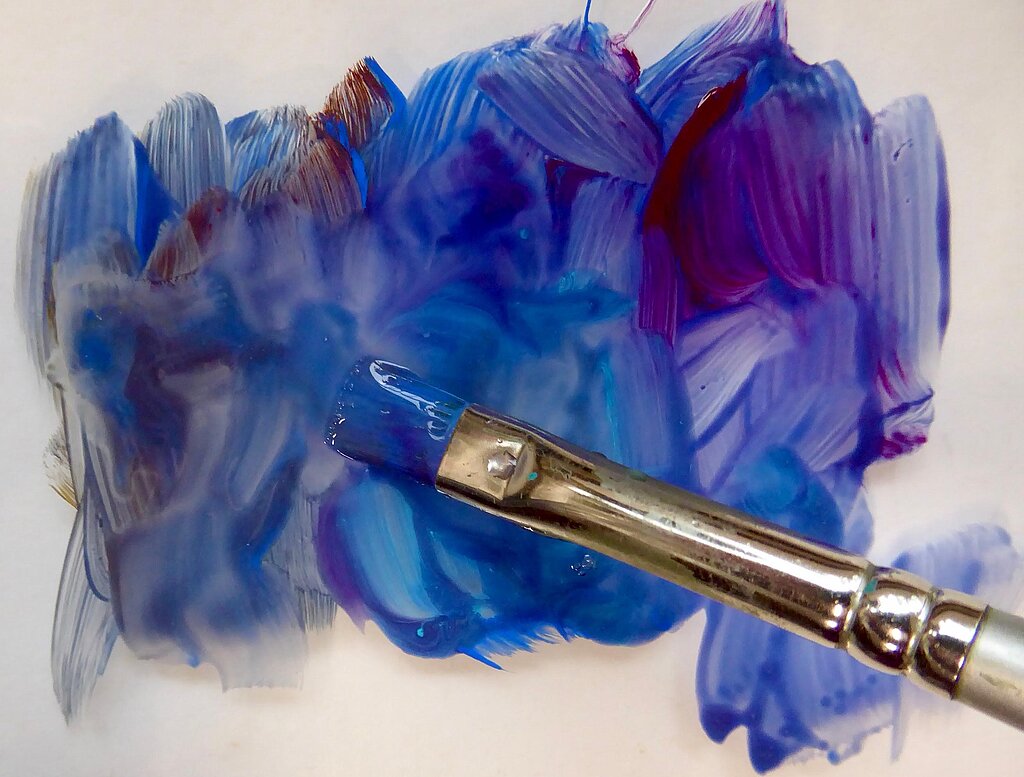
Step 2
Now for the paint! Here I am blending Cobalt blue light, Manganese violet and Alizarin crimson hue for the background hills. I added water to the mix so the paint would flow over the canvas in a watercolour way.

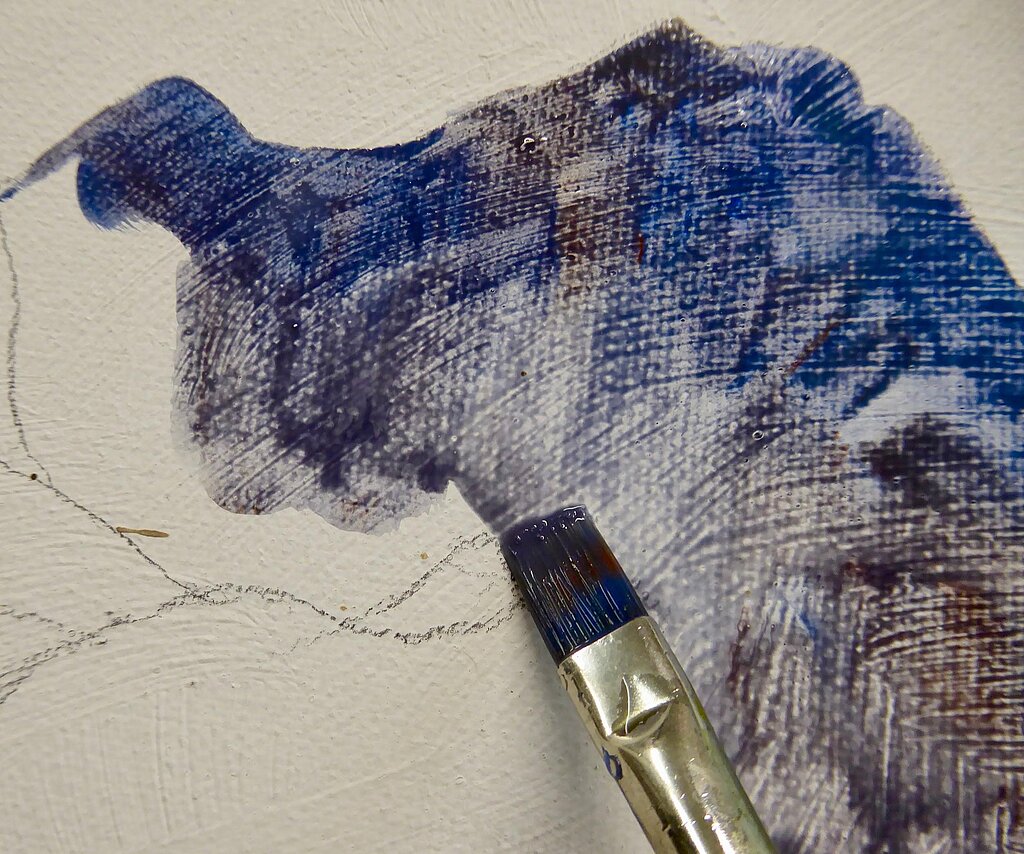
Step 3 + 4
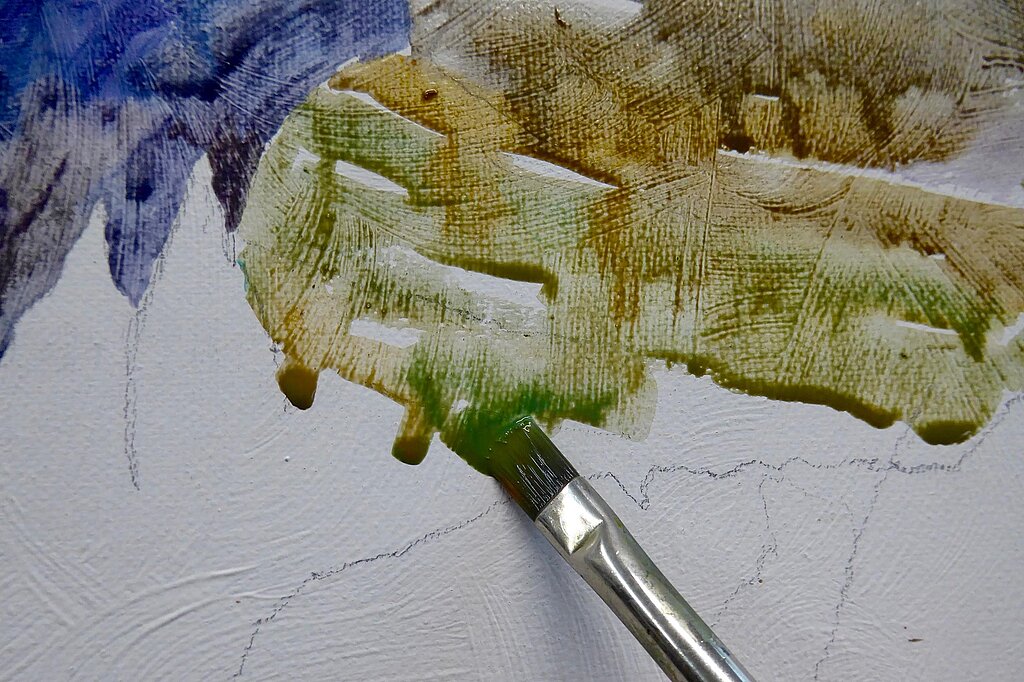
With a brush full of clean water, I dilute the paint already on the surface as I don't want the colour of these distant mountains to be too strident. I am not too worried about colour strengths at this stage as I just want to get as much of the canvas covered with paint before I start making any adjustments.
The rock surface of the mountain to the right of the picture is a totally different colour to the background mountain range. I have blended Indian yellow, Alizarin crimson hue and a touch of Cobalt blue into a very fluid mix making a series of almost horizontal brushstrokes.
Step 5
Time to get into this very prominent peak in the mid distance. Here I have blended Alizarin crimson hue and cobalt blue for this prominent outcrop. Moving over to the left-hand mountains I have added some Indian yellow into the mix to give it a slightly warmer feel.


Step 6
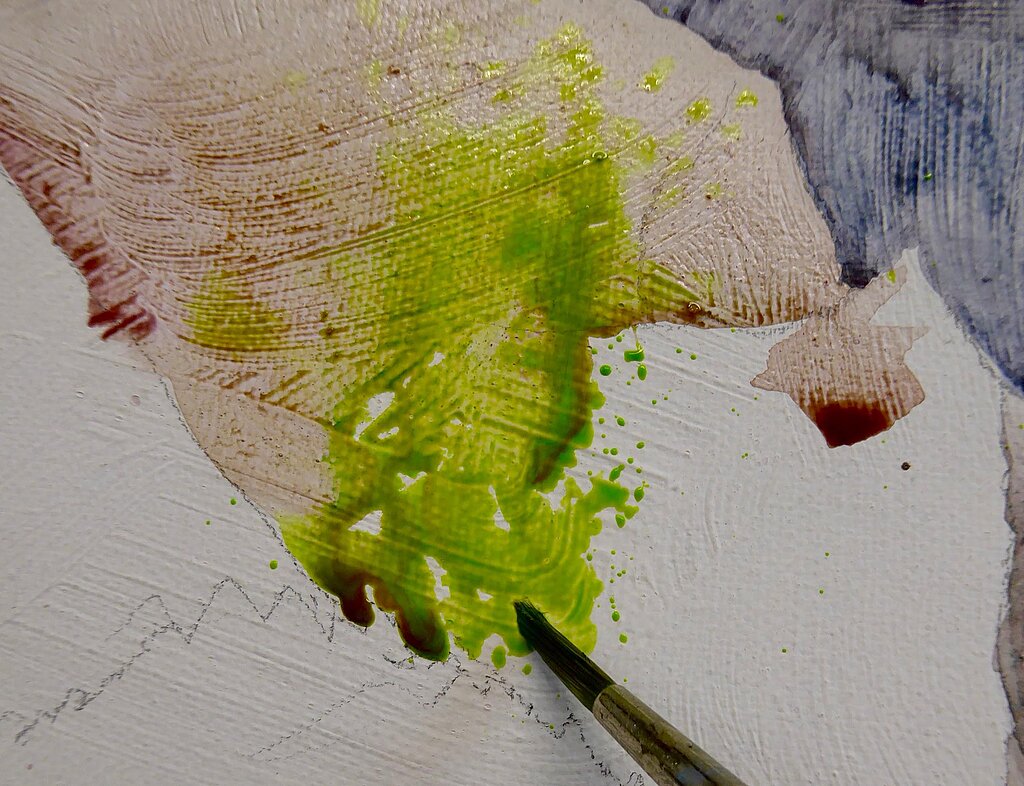
Then I added some greenery to the mix where grass and bushes were growing over the rock surface. This mix consisted of brilliant yellow, Cobalt blue and a touch of Alizarin crimson hue and I started painting it into the still wet rock mixture.
Step 7
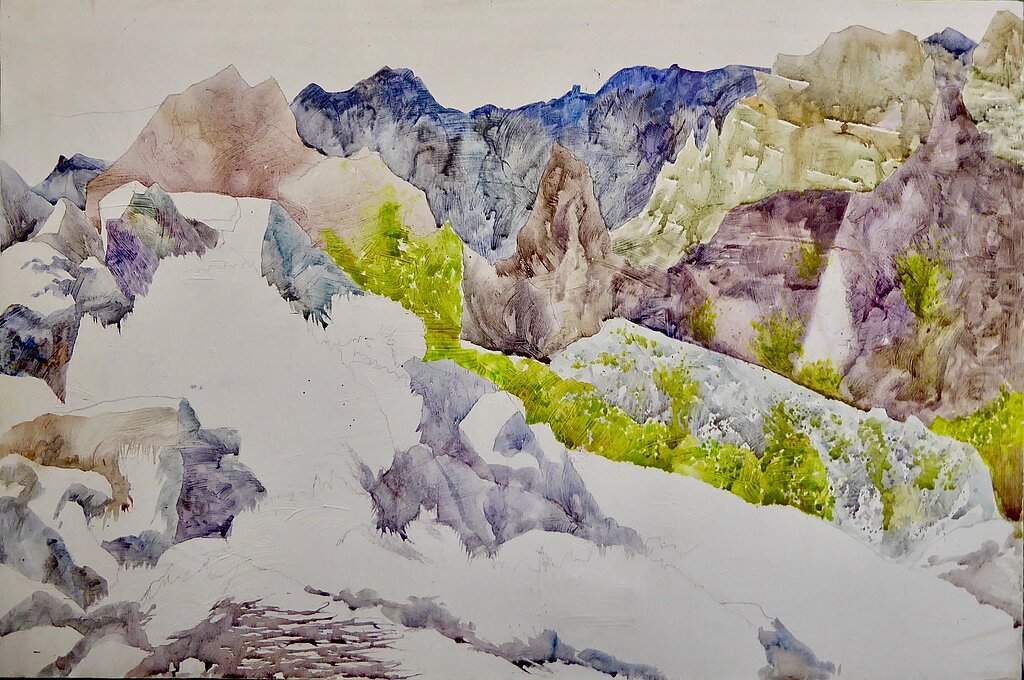
Here I have pretty much covered every rock surface with its basic colour so I could see where I was going with all the foliage areas. I carried on down the painting with my greenery mix spreading it over the huge light rock in the mid distance flicking paint to produce the broken surface of the foliage. Now I can start to adjust my colours and the bluish background mountains need to be toned down.
Step 8
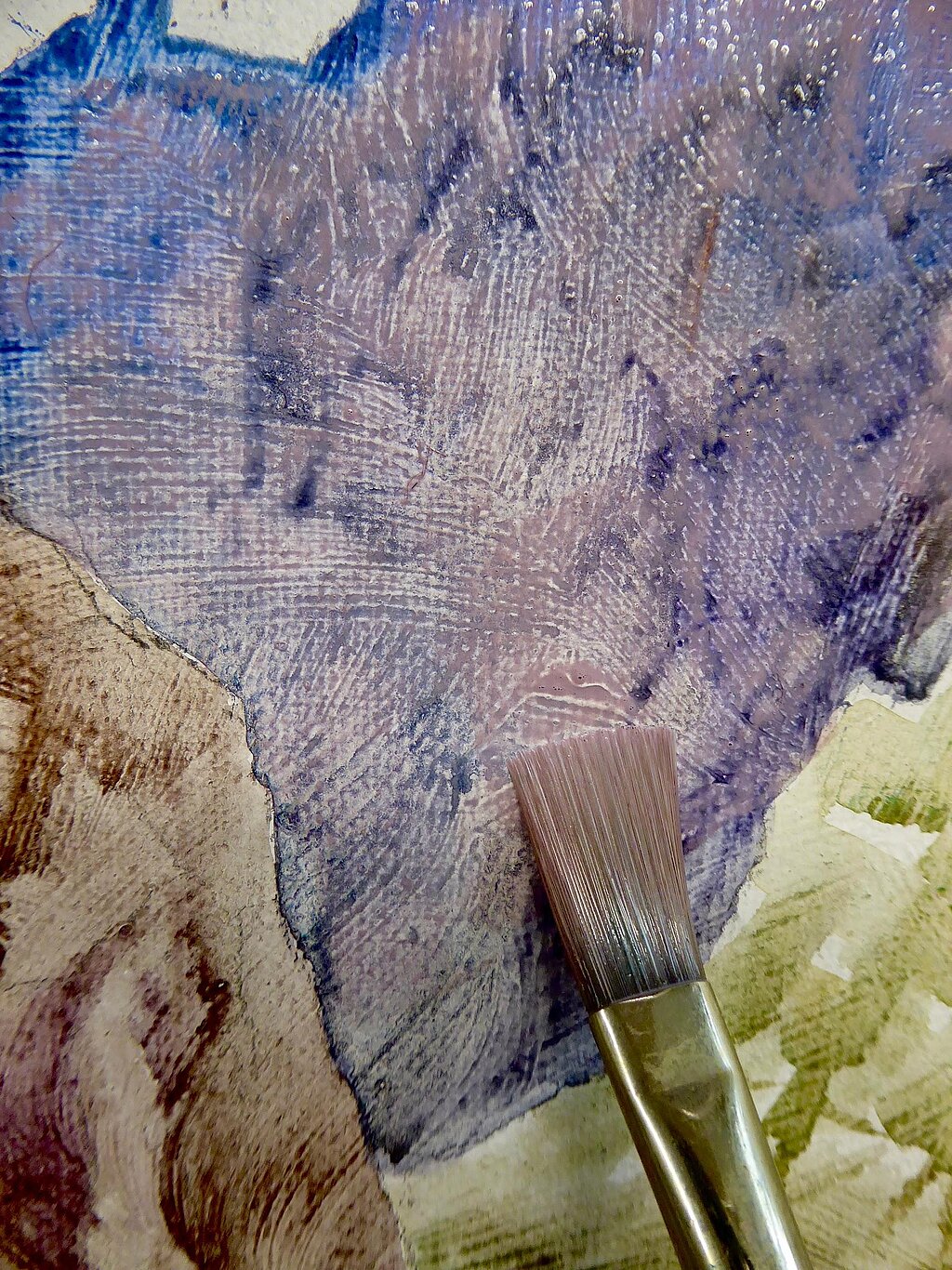
Using Zinc white, I mixed up a blend of Chinacridone red and a touch of yellow which I would use to overpaint the background range. Some of the original colours still show through, but in a more subtle fashion.

Step 9
I now start to go into all the individual rock faces and lay in stronger glazes of colour into them. Here is a predominantly violet and orange mix. Another rock. A very much more diluted wash of the previous mix was used, where a lot of the underlying wash still shines through.
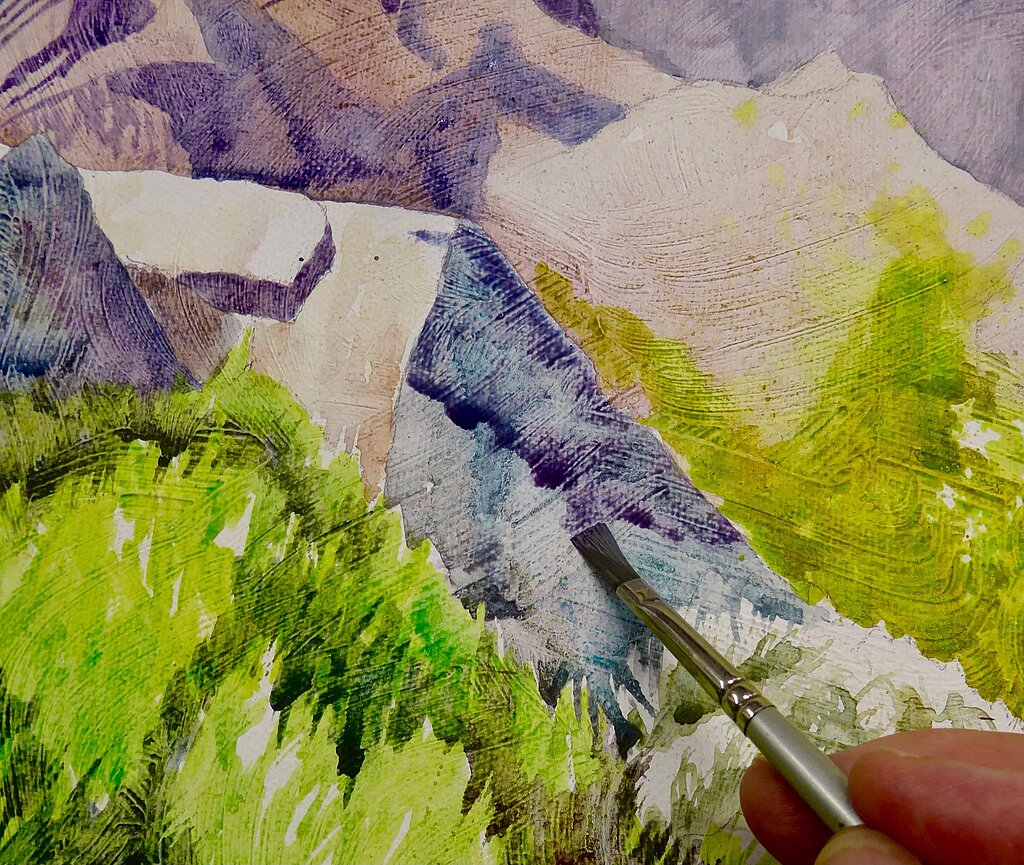

Step 10
Drawing all the cracks and fissures in the rocks is always very satisfying as it brings a lot of detail into the painting. I’m using a strong mix of Cobalt blue, Alizarin crimson hue and Manganese violet with my round brush.
There are an awful lot of long grass/bushes in this painting, and this is where the flat brush really comes into its own. With a mix of Brilliant yellow and Cobalt turquoise I paint in the grass with vertical strokes of my flat brush.
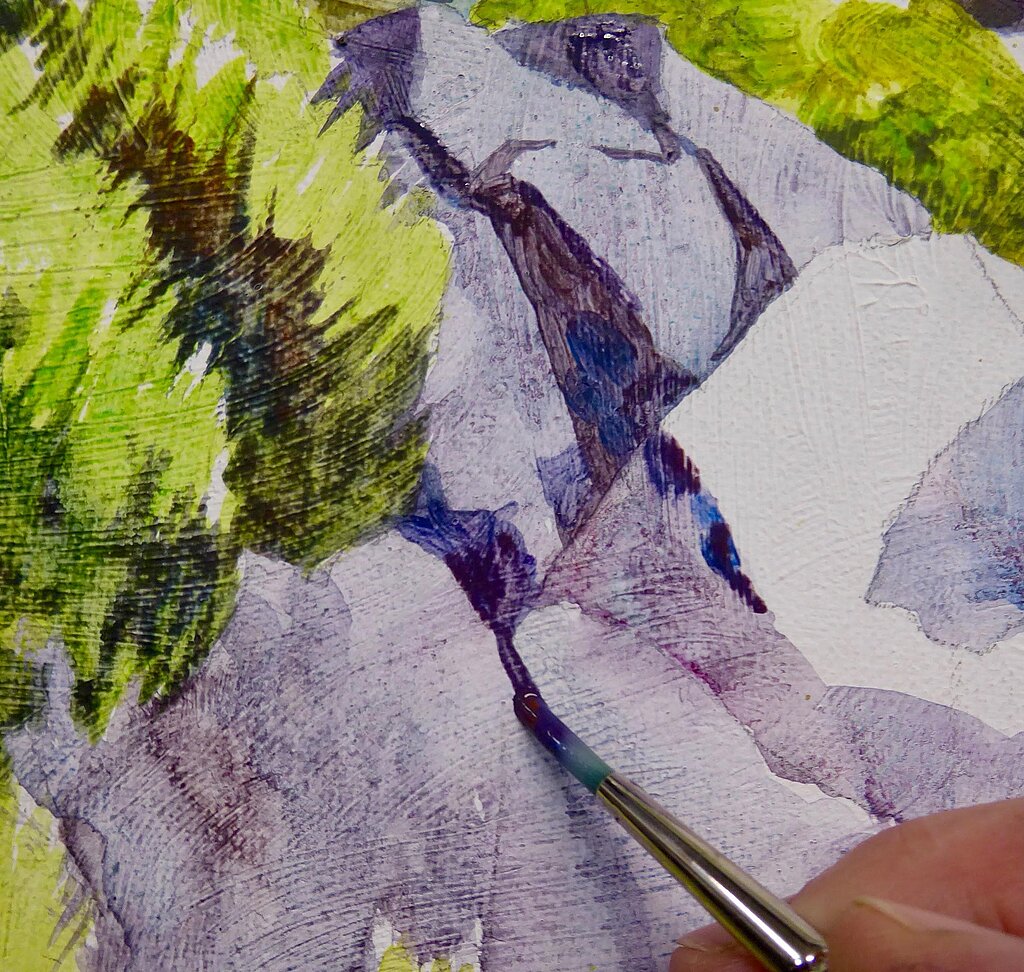

Step 11
Now I am overlaying the shadow areas of the rocks with blue/violet mixed with the clear painting medium to give them a transparent glow. Here you can see that I have established all the areas of this rather complex view with all their local colours and shadows. Now I can concentrate on all final details.
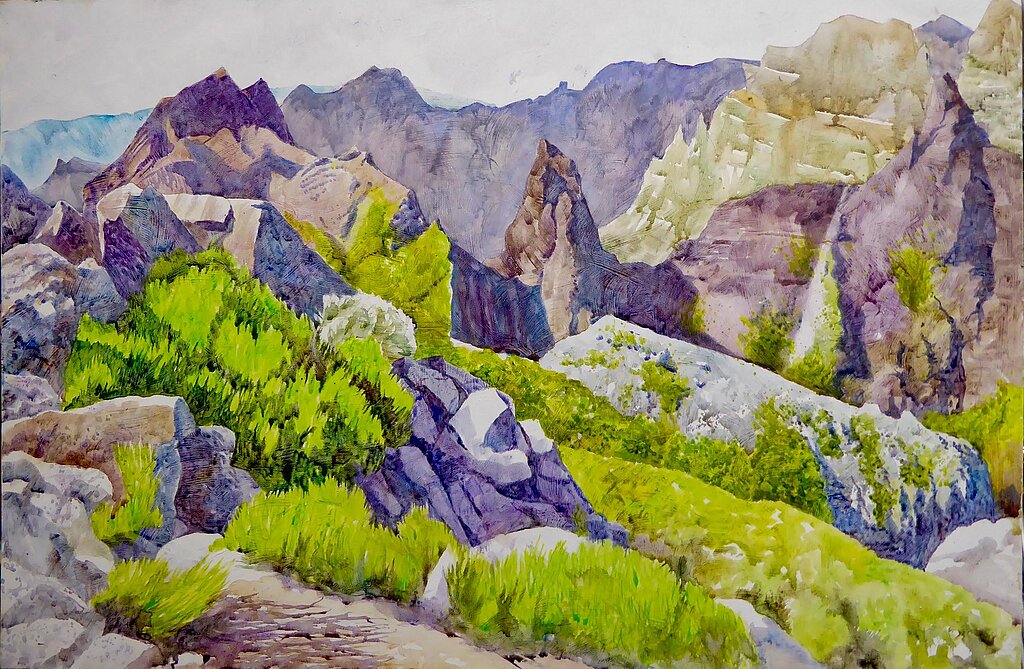

Step 12
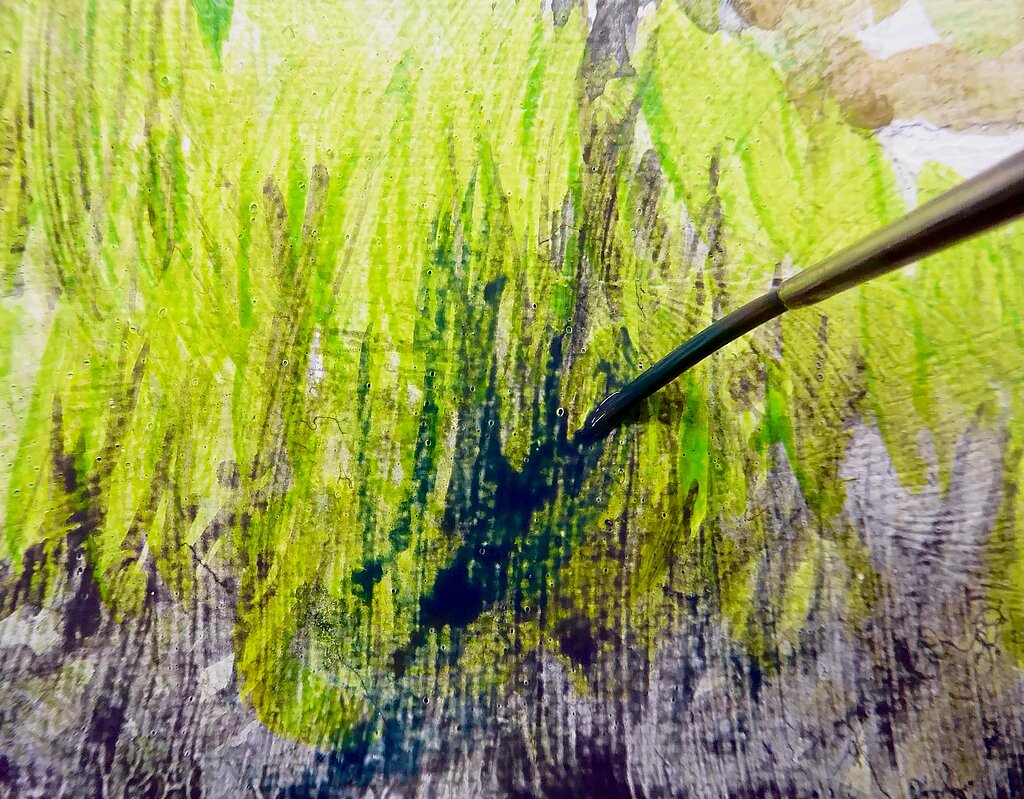
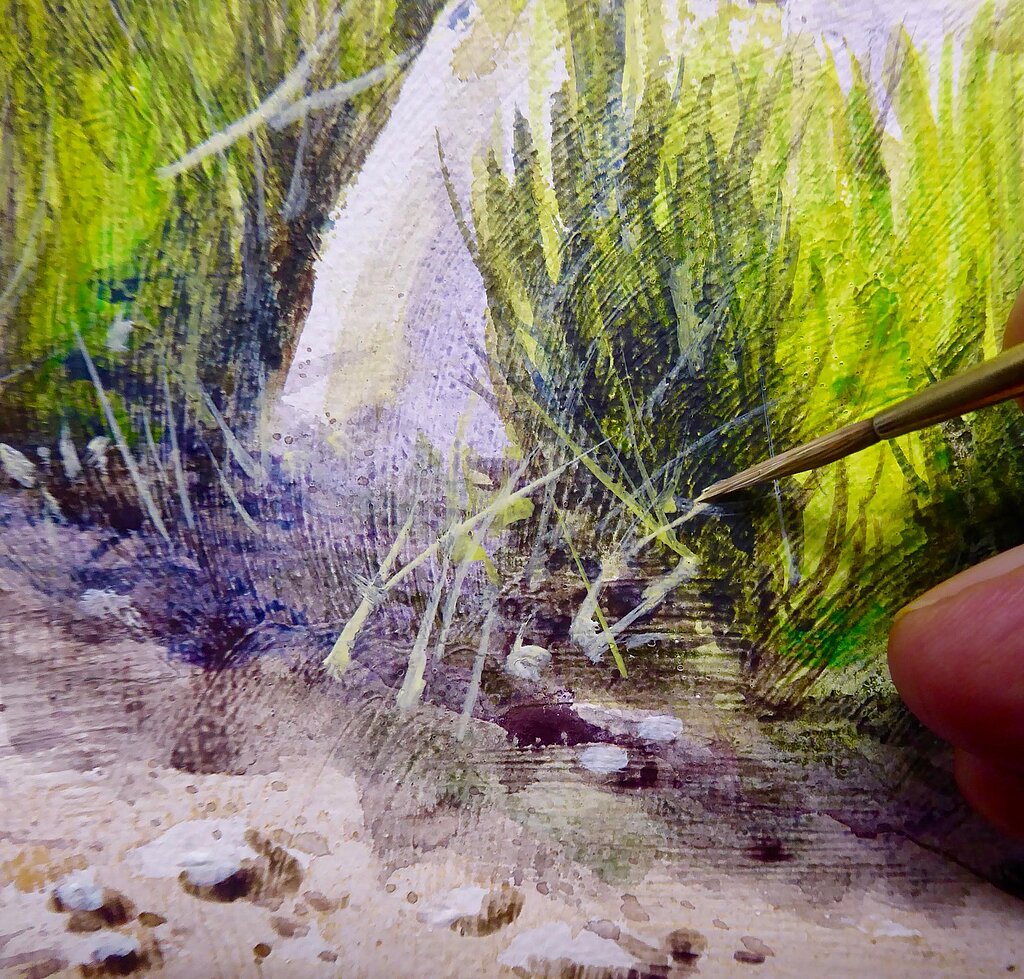
Using my rigger and some juicy dark green paint I work into the darker areas of the foreground grasses. My mix consists of predominantly Phthalo green with Alizarin crimson hue and a touch of Manganese violet. I also brush in some of the highlighted twigs and stems of the foreground bushes. I used Titanium white mixed with a touch of yellow in quite a thick application to gain optimum opacity.
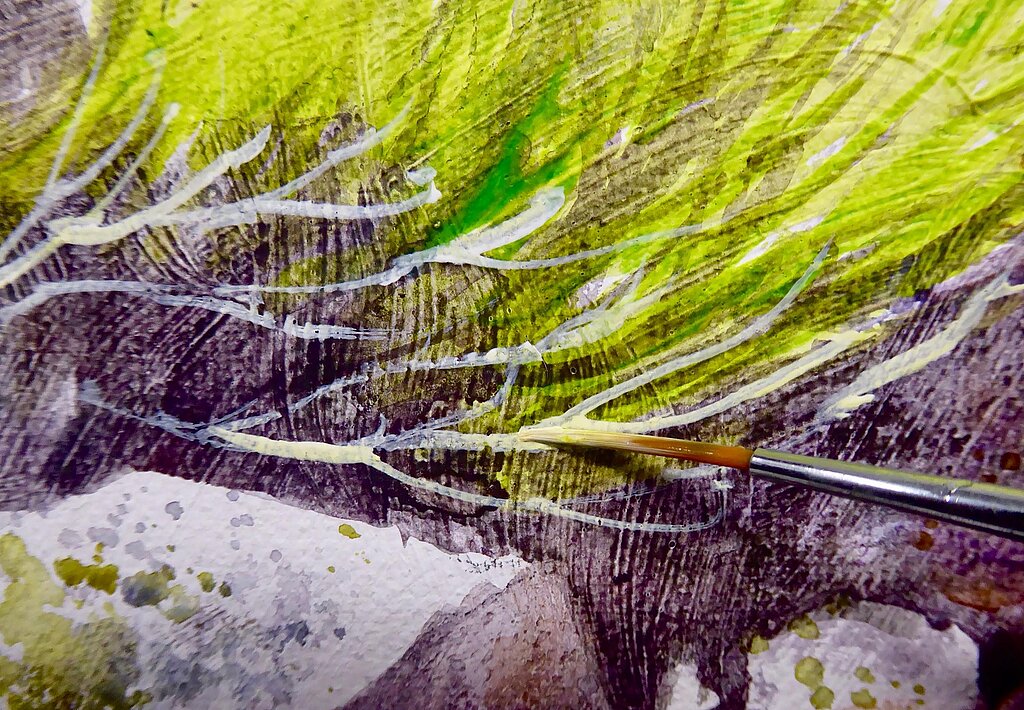
Step 13 + 14
Now we need to strengthen the darks within the large area of grass/bushes to the left of the painting and in the foreground greenery. I used the dark green mix as before to produce some strong darks within the light greens.
Moving around the painting I’m using my rigger and a white mix to add the odd highlights here and there within the foliage and the rock surfaces to produce those little bits of ‘jewelry’ to the finished painting.
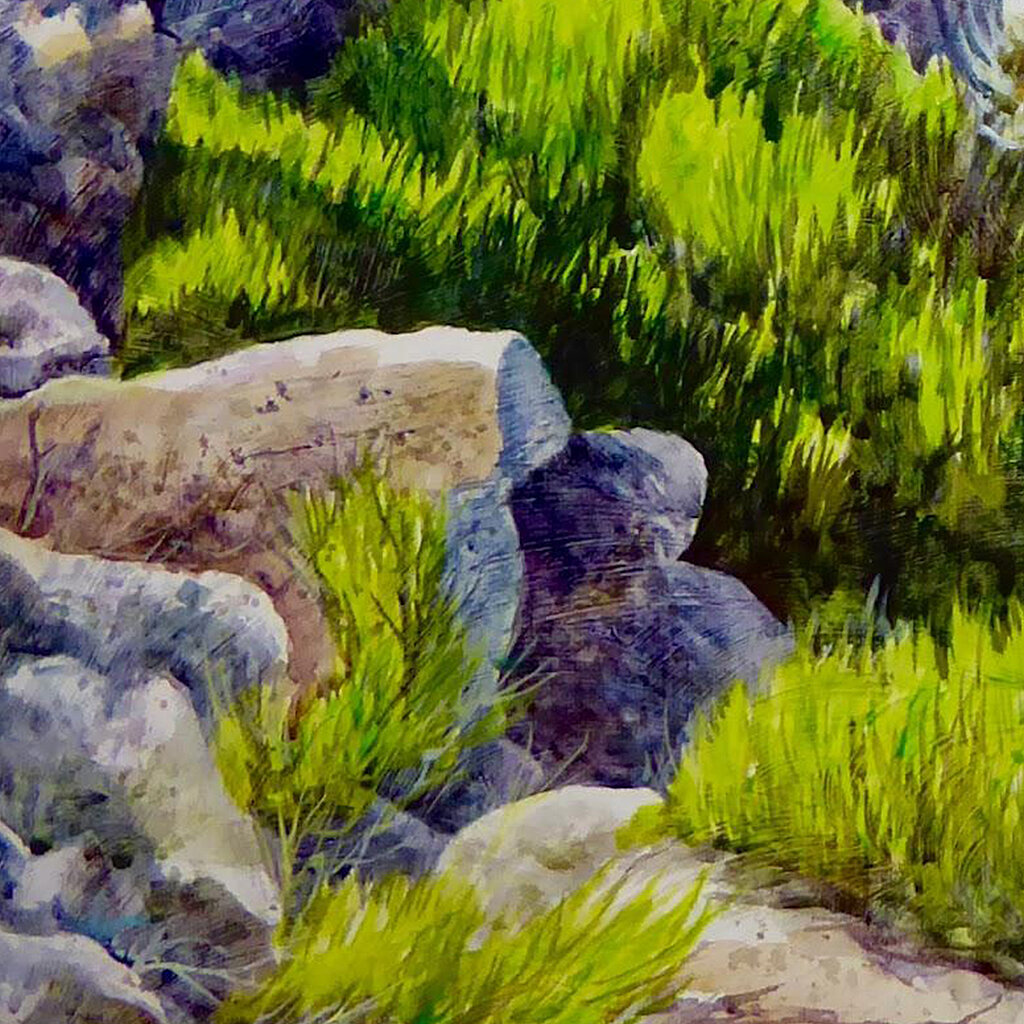
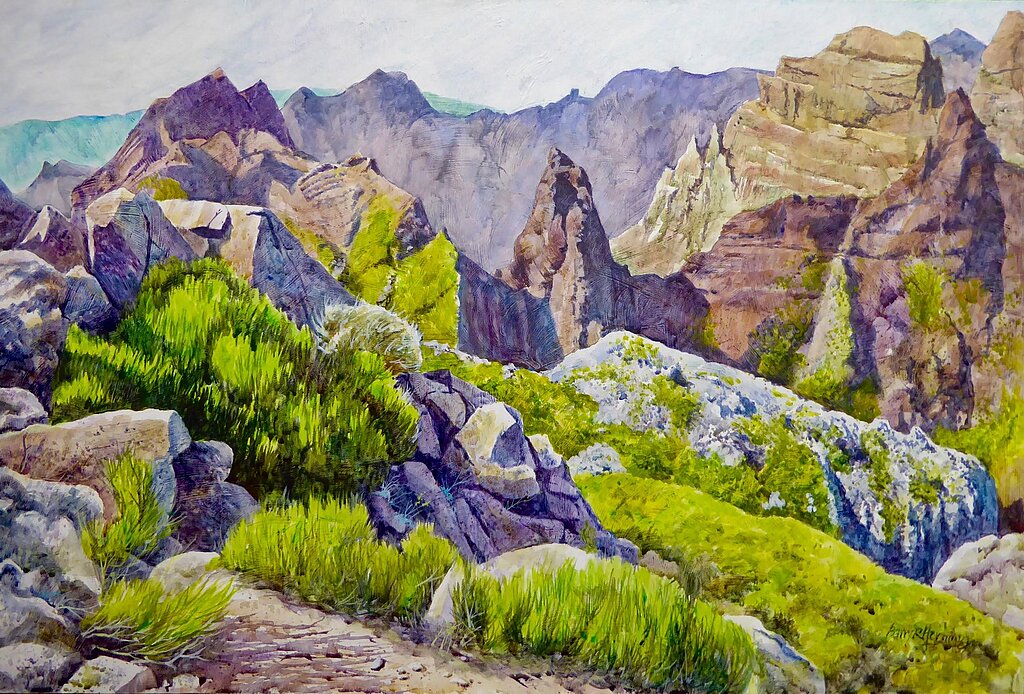
The finished painting ‘On top of the World’ The Pico de Arieiro, Madeira. Acrylic on box canvas 76 x 50 cm.
The artist

Barry Herniman organizes and tutors painting holidays and breaks at home and abroad. He is also available for workshops, demonstrations and Zoom sessions to art groups and societies. His newest book ‘Sketching Outdoors’ is available to purchase at £14.99 with free postage. It has 144 pages in full colour and is full of tips, techniques and demonstrations. To go on his mailing list for future events email: bazherrflick(@)gmail.com
Check Barry’s website at barryherniman.com
